True repurposing means generating platform-native variations for each network — different hooks, different formats, different copy lengths, different CTAs. The manual workflow takes ~3 hours per source video. Persona-aware AI tools like Socialchannel.ai generate all 9 variations in ~10 minutes from a single transcript.
Why Cross-Posting Stopped Working
TikTok, Instagram, LinkedIn, and YouTube have all updated their distribution algorithms to detect cross-posted content — vertical videos with TikTok watermarks, captions written in TikTok format, hooks that don't match the platform. The signal is treated as low-effort and gets demoted.
The implication is structural: cross-posting is now actively harmful. You either invest the time to make platform-native variations, or you focus on one platform and skip the others entirely.
The 9 Platform-Native Variations
One source video (typically a 60-second talking-head or POV piece) becomes:
- TikTok — vertical, 30-60s, hook in first 1.5s, on-screen captions, trending audio if relevant
- Instagram Reels — vertical, 15-90s, slightly slower hook (Instagram's algorithm gives marginally more grace), Instagram-native music
- YouTube Shorts — vertical, 30-60s, more storytelling-friendly than TikTok, descriptive title for SEO
- Instagram Carousel — 8-10 slides reformatting the video's content as visual carousel; very different format
- LinkedIn Post — text-first version of the same insight, 2-line hook, no video
- X (Twitter) Thread — 5-8 tweets unpacking the same insight, conversational
- Facebook Reel — same as Instagram Reels but distributed via Facebook
- Threads Post — short text version with conversational tone
- Pinterest Pin — visual quote graphic with link back to long-form content
Step 1 — Transcribe the Source Video
Repurposing starts with text. Transcribe the source video (Otter, Whisper, or built into video editors). The transcript is the raw material for every variation.
Step 2 — Identify the Core Insight
From the transcript, identify the single core insight or argument. Every variation will reframe this same insight — different format, different hook, different length.
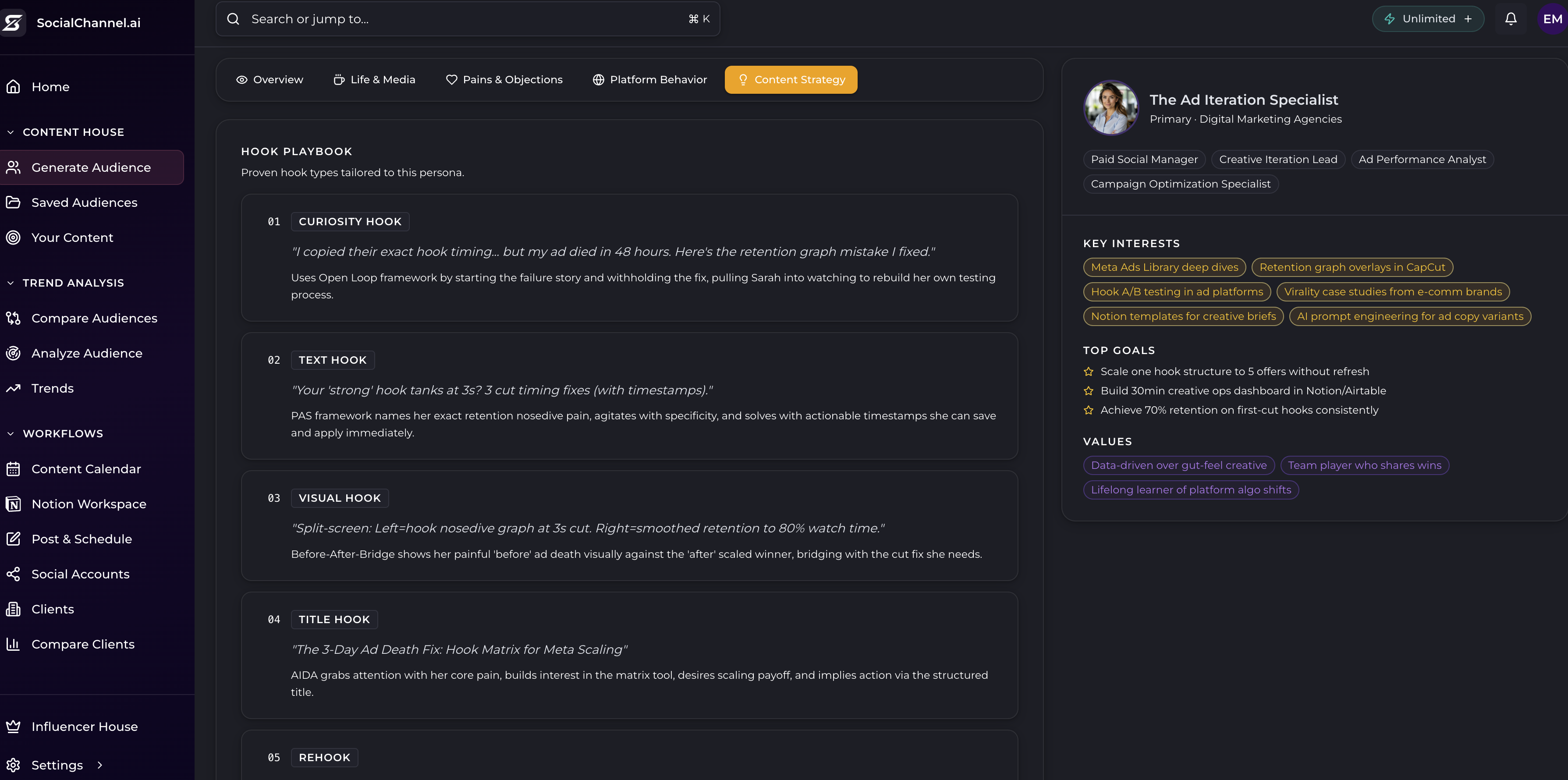
Step 3 — Write Platform-Native Hooks
The hook changes per platform. TikTok needs a 1.5-second pattern interrupt; LinkedIn needs a 2-line provocation; X needs a hook tweet that promises a thread. Each platform's algorithm rewards different hook structures.
Step 4 — Reformat for Each Platform
The body adapts to platform conventions. TikTok content gets shortened and on-screen text added. Instagram Carousel gets restructured into 8-10 slides with one main idea per slide. LinkedIn gets paragraph breaks every 1-2 lines for scrollability. X thread gets broken into bite-sized tweets with continuation cues.
Step 5 — Adjust the CTA
Each platform has different conversion expectations. TikTok CTAs are typically "follow for more" (algorithm rewards retention, not link clicks). LinkedIn CTAs can be direct (link in comments). YouTube Shorts CTAs are usually "subscribe for the full video" with the long-form version on the same channel.
Manual vs AI Repurposing
Manual repurposing of one video into 9 platform-native variations takes a careful creator ~3 hours. The work is meaningful but mechanical — applying known platform rules to a transcript.
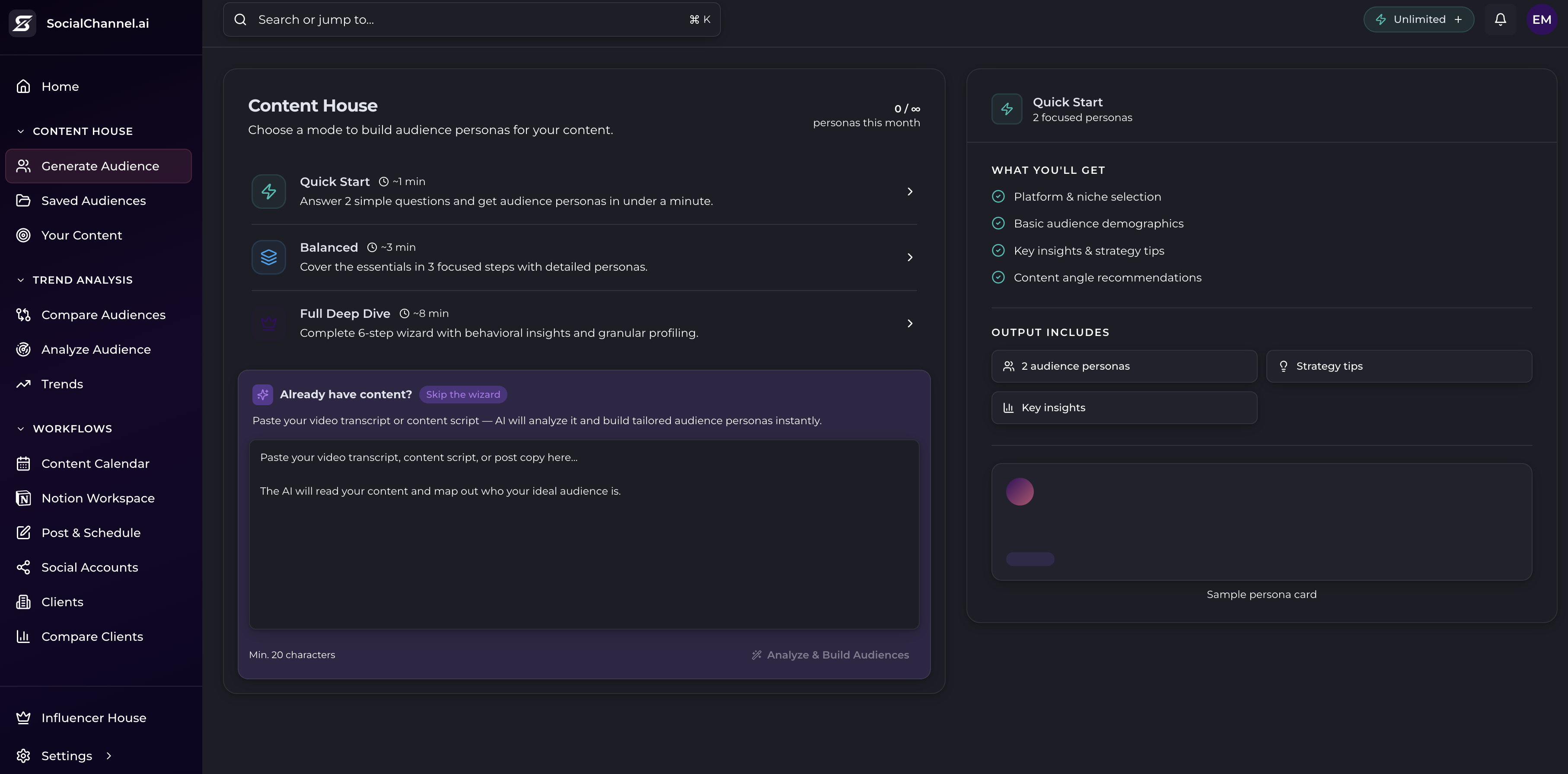
This is where persona-aware AI compounds time savings. Socialchannel.ai's content engine takes a transcript or video and produces 9 platform-native variations in ~10 minutes — each variation grounded in your audience persona and formatted to platform conventions. You review, edit, and schedule.
1 video → 9 platform-native posts in 10 minutes
Persona-aware AI repurposing across TikTok, Reels, Shorts, LinkedIn, X, Carousel, Threads, Pinterest. Try Socialchannel.ai free for 15 days.
Start Free TrialFrequently Asked Questions
Why does cross-posting hurt TikTok and Instagram performance?
TikTok, Instagram, LinkedIn, and YouTube algorithms have all been updated to detect cross-posted content — TikTok watermarks, mismatched captions, hooks that don't fit the platform. Detected cross-posts are treated as low-effort and demoted. The fix is platform-native repurposing rather than cross-posting.
How do I repurpose 1 TikTok into multiple platforms?
Transcribe the TikTok, extract the core insight, then write platform-native hooks and reformat for each platform's conventions. TikTok stays vertical with on-screen text; LinkedIn becomes a text post with 2-line hook; X becomes a thread; Instagram Carousel becomes 8-10 slides. Manual workflow: ~3 hours per video. AI-assisted: ~10 minutes.
Can AI repurpose video content?
Persona-aware AI tools like Socialchannel.ai take a video transcript and generate platform-native variations for 9 networks in ~10 minutes — each grounded in your audience persona and formatted to platform conventions. Generic AI (ChatGPT) requires extensive prompting per platform; persona-aware AI does it natively.
How many platforms should creators be on?
For most creators in 2026, 3-4 platforms is the sustainable maximum if you're producing platform-native content for each. Cross-posting to 9 platforms produces less reach than focused effort on 3-4 platforms with native variations. Use AI repurposing tools to extend your platform count without proportionally increasing time investment.
Related Articles
The 30-Day TikTok Content Plan for Creators in 2026
Plan TikTok content; repurpose to 8 other platforms.
How-To GuideHow to Write a TikTok Hook That Converts (with 30 Examples)
Hook variation per platform — different rules per network.
TikTok StrategyBest Social Media Tool for TikTok Creators in 2026
TikTok-native generation in the 9-platform creator stack.
Instagram StrategyBest Social Media Tool for Instagram Creators in 2026
Reels, Carousels, Stories — repurposing to Instagram-native.